By age 50, roughly 70% to 80% of women have at least one fibroid. Most never find out. For others, fibroids mean years of heavy bleeding, pressure and exhaustion, often in exactly the decade when perimenopause gets the blame for everything.
Fibroids are a condition of the hormone years. They never appear before the first period, they grow while the ovaries make estrogen and progesterone, and they usually shrink after menopause. Every fibroid treatment either imitates menopause, waits for it, or risks bringing it forward. So menopause runs through this whole chapter.
The single most important idea to take away: what happens to your menopause after fibroid treatment depends almost entirely on your ovaries, not your uterus.
Fibroids in a nutshell#
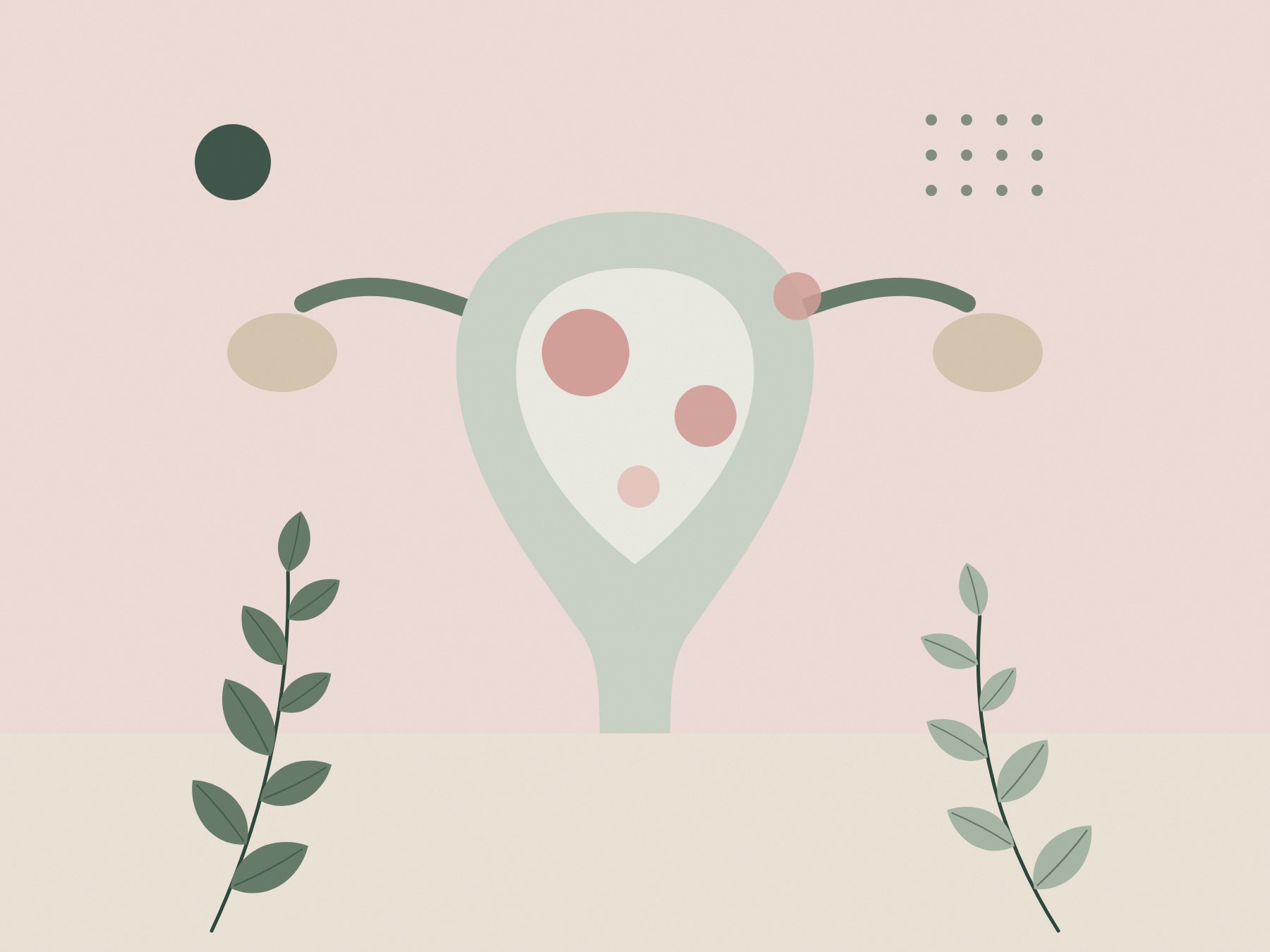
Fibroids (also called leiomyomas or myomas) are non-cancerous growths of the muscle wall of the uterus, and they're the most common tumour in women. Each one grows from a single cell, depends on hormones, and is wrapped in a thin layer of compressed muscle (5-Minute Clinical Consult (opens in a new tab)).
| Group | By age 35 | By age 50 |
|---|---|---|
| Black / African American women | About 60% | Up to 80% |
| White women | About 40% | Up to 70% |
Black women are about three times more likely to develop fibroids, and theirs tend to be larger, more numerous and cause more symptoms. Fibroids are most often diagnosed in the 30s and 40s, and they account for about 30% of hysterectomies in women of reproductive age (PMC vitamin D review (opens in a new tab)).
Where a fibroid sits shapes what it does:
| Type | Where it sits | Typical effect |
|---|---|---|
| Submucosal | Under the lining, bulging into the cavity | Heavy bleeding, fertility problems |
| Intramural | Inside the muscle wall | Heavy periods, cramps, pressure |
| Subserosal | On the outer surface | Pressure on bladder or bowel if large |
| Pedunculated | On a stalk | Sudden pain if the stalk twists |
How a fibroid forms#
It all starts with one cell. A single muscle stem cell in the uterine wall picks up a genetic change, starts to multiply, and recruits its neighbours to grow with it. Estrogen and progesterone then fuel that growth (Northwestern Medicine (opens in a new tab)). There are four linked steps:
- A mutation in one stem cell. The most common driver is a change in a gene called MED12, found in roughly 50% to 80% of fibroids. HMGA2 rearrangements account for about 10%, and a rarer group loses the FH (fumarate hydratase) gene (Monarch Initiative (opens in a new tab)). Studies across populations report MED12 rates from 31% to 80% (Reproductive Sciences review (opens in a new tab)). Fibroid stem cells carry the mutation; the stem cells in the surrounding normal muscle don't.
- Estrogen primes, progesterone drives. Estrogen doesn't cause fibroids on its own. It makes the tissue responsive to progesterone, and progesterone signalling pushes the stem cells to divide and blocks normal cell death (Northwestern Medicine (opens in a new tab); 5-Minute Clinical Consult (opens in a new tab)). That's why fibroids appear only after puberty and usually shrink after menopause.
- Growth factors turn up the volume. Factors such as TGF-β stimulate cell growth and scarring-type changes in the tissue (Birjand review (opens in a new tab)).
- Fibrous "scaffolding" builds the lump. The mutated cells and their neighbours lay down large amounts of disorganised collagen and other fibrous material. This stiff matrix is what gives fibroids their name, and it makes up much of their bulk (PMC biomarker review (opens in a new tab)).
Different mutations make different fibroids. MED12 fibroids tend to be smaller, more numerous and fibrous, with a poor blood supply; fibroids without it tend to have more blood vessels and more muscle-cell growth (Scientific Reports (opens in a new tab)). Mutation type also affects how well drugs such as GnRH agonists shrink a fibroid (Ishikawa & Kobayashi (opens in a new tab)).
Who is more likely to get them#
The strongest risk factors are age, being Black, family history and obesity. Most of the others either add to your lifetime exposure to estrogen or weaken the body's natural brakes on fibroid growth.
| Factor | Effect on risk | Source |
|---|---|---|
| Age (30s and 40s, up to menopause) | Rises with every year of hormone exposure | Florida Health (opens in a new tab) |
| Black / African ancestry | About 3 times higher; larger, more numerous fibroids | 5-Minute Clinical Consult (opens in a new tab) |
| Mother or sister with fibroids | About 2.5 times higher | 5-Minute Clinical Consult (opens in a new tab) |
| Obesity | Up about 21% per 10 kg of excess weight | 5-Minute Clinical Consult (opens in a new tab) |
| First period before age 10 | Higher | WebMD (opens in a new tab) |
| Never having given birth, or a long gap since the last birth | Higher (pregnancy is protective) | PMC vitamin D review (opens in a new tab) |
| High blood pressure | Earlier onset and higher risk | 5-Minute Clinical Consult (opens in a new tab) |
| Low vitamin D | Higher; enough vitamin D is linked to lower risk | PMC vitamin D review (opens in a new tab) |
| Diet, food additives, soy milk, alcohol | Links reported; weaker evidence | PMC vitamin D review (opens in a new tab) |
| Estrogen-containing HRT after menopause | Can stimulate new or existing fibroids | WebMD (opens in a new tab) |
In the FORGE study, an earlier first period was linked to worse symptoms, a heavier uterus and hysterectomy at a younger age (Siegel et al., J Women's Health (opens in a new tab)).
Low vitamin D is more common in Black women, which may help explain the higher rates in that group.
How fibroids affect your body#
Fibroids work on the body in two ways: blood loss from the uterus, and the sheer bulk of the growth pressing on nearby organs. Together, their reach goes well beyond the pelvis. A Johns Hopkins review of 57 studies found the emotional and social burden is comparable to heart disease, diabetes or breast cancer (Johns Hopkins Medicine (opens in a new tab)).
| Body system | What happens | Why |
|---|---|---|
| Blood | Heavy, long periods, clots, bleeding between periods; iron-deficiency anaemia causing tiredness, breathlessness and dizziness | Fibroids enlarge the lining's surface and disrupt how the uterus contracts to stop bleeding |
| Heart | In severe, untreated cases, chronic blood loss can strain the heart; one forum member describes lasting heart failure after a year of heavy bleeding | Severe anaemia makes the heart work harder (Mayo Clinic Connect (opens in a new tab)) |
| Bladder | Needing to wee often or urgently, trouble emptying, leaks | A large fibroid, or one on the front wall, presses on the bladder |
| Bowel and back | Constipation, bloating, lower-back and leg pain | Fibroids on the back wall press on the bowel and nerves |
| Belly | Swelling that can look like pregnancy; one Reddit poster describes a 5 lb (2.3 kg) mass | The bulk of the fibroid (r/Wellthatsucks thread (opens in a new tab)) |
| Pain | Cramps, pelvic ache, sudden sharp pain | A fibroid outgrowing its blood supply, or a stalked fibroid twisting |
| Fertility and pregnancy | Difficulty conceiving, miscarriage, growth during pregnancy | Submucosal fibroids distort the cavity; others can grow under pregnancy hormones (WebMD (opens in a new tab)) |
| Sex | Pain during sex | Pressure and position of the fibroid |
| Mind and daily life | Anxiety, depression, poor self-image, lost work days, strained relationships | The weight of symptoms and uncertainty about treatment (BMC Women's Health 2025 (opens in a new tab); narrative review (opens in a new tab)) |
Fibroids through the menopause years#
Fibroids usually shrink and settle after menopause because their hormone supply falls. Usually, but not always, and HRT can partly reverse that. Fibroids don't delay menopause either: menopause is set by the ovaries, not the uterus (The Lowdown (opens in a new tab)).
| Stage | What usually happens to fibroids | What to watch for |
|---|---|---|
| Before perimenopause | May grow, stay the same or shrink | Heavy bleeding, anaemia, pressure |
| Perimenopause | Hormones swing; fibroid bleeding overlaps with irregular perimenopause periods, which often hides the cause | Bleeding that is very heavy, constant or with large clots should be scanned, not assumed to be "just peri" |
| After menopause | Usually settle or shrink; symptoms ease | Any bleeding, or a new or growing mass, needs prompt checking (Menopause Review 2023 (opens in a new tab)) |
HRT and fibroids. Fibroids aren't a reason to rule out HRT. HRT may stimulate some growth, mainly in the first two years, and fibroid size tends to settle by year three; the type and dose of HRT matter (Voy, citing NICE NG23 (opens in a new tab)).
Waiting it out. For women in their mid-to-late 40s with manageable symptoms, waiting for menopause can be reasonable. Patient stories show both sides: some found small fibroids caused no more trouble once periods stopped, while others describe years of misery waiting, or fibroids that kept growing after menopause despite being reassured (QVC community (opens in a new tab); Vajenda comments (opens in a new tab)).
Hysterectomy: it all comes down to your ovaries#
Removing the uterus ends periods and pregnancy for good. Removing both ovaries before natural menopause triggers an immediate "surgical menopause". Keeping healthy ovaries usually avoids that, although menopause may arrive somewhat earlier.
| Issue | Fibroids left in place | Hysterectomy, ovaries kept | Hysterectomy and both ovaries removed (before menopause) |
|---|---|---|---|
| Periods | Continue until natural menopause | Stop for good | Stop for good |
| Immediate menopause | No | Usually no | Yes, abrupt |
| Hot flashes, night sweats | During natural menopause | Possible later | Often within hours to weeks |
| Fibroids can come back | Yes | No | No |
| Can carry a pregnancy | Possibly | No | No |
| Usual HRT, if needed | Combined (estrogen and progestogen) | Estrogen only | Estrogen only, usually advised until about 51 |
Both ovaries kept. Your periods stop, but your ovaries keep making hormones, so menopause usually isn't immediate. It may come earlier than it would have: a review of 14 studies (1,457 women) found changes in markers of ovarian function after hysterectomy, though it can't predict timing for any one woman (PMC meta-analysis (opens in a new tab)). In one large study, the ovaries stopped working about 1.9 years earlier than in women who hadn't had surgery (Moorman et al. (opens in a new tab)). With no periods to track, menopause is judged by your age and symptoms. One survey found women who kept their ovaries had lower odds of hot flashes than women with natural menopause (Gallicchio et al. (opens in a new tab)).
One ovary removed. Keeping one ovary still avoids an immediate menopause, but it may bring menopause forward further. In one study, women who had one ovary removed reached menopause about 4.4 years earlier than those who kept both, and 35.7% were menopausal within 5 years, although this group was small (28 women) (Farquhar et al. (opens in a new tab)).
Both ovaries removed. If this happens before natural menopause, menopause starts straight away. Surgical menopause tends to bring more abrupt, more severe symptoms than natural menopause, plus long-term effects on bone, heart and brain health (Voy (opens in a new tab)). Hot flashes and night sweats are the most common symptoms, alongside low mood, anxiety and mood swings, and HRT is usually advised until at least age 51 (University of Edinburgh (opens in a new tab)). Removing healthy ovaries isn't automatically necessary for fibroids; NICE says it should be a separate, informed decision.
Which HRT. Without a uterus, estrogen-only HRT is generally used, because the progestogen in combined HRT is there to protect the lining of the uterus. There are exceptions, such as a history of endometriosis.
How each treatment affects the timing of menopause#
| Treatment | Effect on menopause | Study and size |
|---|---|---|
| Hysterectomy, both ovaries kept | Ovaries stopped working about 1.9 years earlier; 14.8% vs 8.0% within about 4 years | PROOF study, 406 women having hysterectomy vs 465 without, aged 30 to 47 (Moorman et al. (opens in a new tab); Contemporary OB/GYN (opens in a new tab)) |
| Hysterectomy, both ovaries kept | Menopause about 3.7 years earlier; 20.6% vs 7.3% menopausal by 5 years | 257 vs 258 women (Farquhar et al. (opens in a new tab)) |
| Hysterectomy, one ovary removed | A further 4.4 years earlier than keeping both; 35.7% menopausal within 5 years | Same study, 28 women (Farquhar et al. (opens in a new tab)) |
| Hysterectomy, both ovaries removed before menopause | Immediate menopause | All studies |
| Uterine fibroid embolisation, under 45 | No change in age at menopause (48.9 vs 49.5 years) over 7 years | 43 matched pairs (Tropeano et al., Fertility and Sterility 2011 (opens in a new tab)) |
| Uterine fibroid embolisation, over 45 | Ovaries stopped working in about 7%, almost all over 45; up to about 3% under 45 | FIBROID registry and review (Viva Eve summary (opens in a new tab); Ginekologia Polska (opens in a new tab)) |
| MRI-guided focused ultrasound | Average menopause at 51.4 years, in line with global averages | 99 women over 7 years (PMC (opens in a new tab)) |
| GnRH drugs | A temporary medical menopause; spine bone density down 0.8% after 12 months on combination therapy | Phase 3 trials (OBG Management (opens in a new tab)) |
Why might hysterectomy bring menopause forward? The leading explanations are reduced blood flow to the ovaries once the uterine arteries are tied, and faster use of egg follicles. The underlying condition may also play a part (NEJM Journal Watch (opens in a new tab)). A later analysis of the PROOF study found a bigger drop in anti-Müllerian hormone, a marker of egg reserve, one year after surgery than in women who hadn't had it (Trabuco et al. (opens in a new tab)).
GnRH drugs such as relugolix work by lowering estrogen and progesterone to postmenopausal levels. That causes hot flashes and bone loss unless low-dose "add-back" hormones are given alongside (Drugs review, PMC (opens in a new tab)).
Why keeping your ovaries matters#
Removing both ovaries before natural menopause is linked to worse long-term health, mainly when estrogen isn't replaced.
- Heart: women whose ovaries were removed before 45 had almost double the rate of death from heart and circulatory disease; those treated with estrogen did not (Mayo Clinic Cohort Study, via Relias Media (opens in a new tab)).
- Overall survival: deaths from any cause were higher after preventive removal before 45 (hazard ratio 1.67), and higher still without estrogen (1.93) (MDedge (opens in a new tab)). In the Nurses' Health Study of about 29,000 women having hysterectomy, removing the ovaries gave no survival benefit at any age (same source).
- Brain and mood: the Mayo study of more than 3,400 women followed for 25 years linked early removal to a higher risk of Parkinson's (about 80%), cognitive impairment or dementia (about 70%), depression (54%) and anxiety (MDedge (opens in a new tab)).
- Bones, sex and wellbeing: reviews also report more osteoporosis and fractures, and declines in sexual function and psychological wellbeing (Shuster, Rocca et al. (opens in a new tab)).
Treatment options compared#
Hysterectomy is the only permanent cure, but several options keep the uterus. The usual trade-off is the chance of fibroids coming back.
| Option | Keeps uterus | Recovery | Main upside | Main downside |
|---|---|---|---|---|
| Watchful waiting | Yes | None | No procedure; fibroids often shrink at menopause | Symptoms may continue or get worse |
| Medication (hormonal IUD, pill, tranexamic acid, GnRH drugs) | Yes | None | Controls bleeding and pain; some shrink fibroids short-term | Temporary; GnRH drugs cause menopause-like side effects |
| Hysteroscopic removal | Yes | Days | For fibroids bulging into the cavity; no cut on the belly | Only suits certain locations |
| Myomectomy (open, keyhole or robotic) | Yes | 2 to 6 weeks | Removes fibroids, keeps fertility | About 15% to 33% develop fibroids again within 5 years (Thomson Medical (opens in a new tab)) |
| Uterine fibroid embolisation (UFE) | Yes | About 1 to 2 weeks | No surgical cut; shrinks fibroids by cutting off their blood supply | Often severe pain for the first days; effects on pregnancy and ovaries need discussing |
| Radiofrequency ablation or focused ultrasound | Yes | Days | Targets fibroid tissue directly | Availability and suitability vary |
| Hysterectomy | No | About 2 to 8 weeks, depending on the method | A permanent end to fibroids and bleeding | Major surgery; ends fertility; possible earlier menopause |
What real patients say#
Across Reddit (r/Fibroids, r/HysterectomyCons, r/surgicalmenopause, r/Menopause), Mumsnet, Mayo Clinic Connect and other forums, the loudest theme is relief after treatment, often with regret at not acting sooner. The second is frustration at being dismissed for years. Remember these are self-selected stories, not statistics: people with very good or very bad outcomes post the most.
After hysterectomy
- Mostly very positive among women with large or many fibroids. "Best decision" and "I wish I'd done it sooner" come up again and again (Mumsnet (opens in a new tab); Well-Trained Mind (opens in a new tab)). One woman with 5 lb of fibroids, who kept her ovaries, described feeling physically light for the first time (Reddit (opens in a new tab)).
- Freedom from planning life around bleeding is a common practical benefit, mentioned after ovary-sparing keyhole surgery (Well-Trained Mind (opens in a new tab)).
- A vocal minority regret it. r/HysterectomyCons collects stories of feeling rushed, changes in body shape, sexual changes and back pain, and posters say much of what they learned came from Reddit rather than their surgeon (r/HysterectomyCons (opens in a new tab)). Others there describe being made to feel bad for choosing myomectomy instead.
After myomectomy
- Fibroids coming back is the main fear, and a real experience. One r/Fibroids poster saw a fibroid return within two months; a UK blogger needed a hysterectomy three years after open myomectomy (r/Fibroids (opens in a new tab); Helen in Wonderlust (opens in a new tab)).
- Chosen mainly to protect fertility. Many posters are planning a pregnancy and ask how soon others conceived afterwards (r/Fibroids (opens in a new tab)).
- Rare but serious complications are reported, such as scarring inside the uterus (Asherman's syndrome) affecting periods and fertility (iWantGreatCare review (opens in a new tab)).
After uterine fibroid embolisation
- Painful first days, then strong relief. Posters describe intense cramping for about three days but say it was worth it, with no pain afterwards (Mayo Clinic Connect (opens in a new tab)). A nurse who needed a three-unit blood transfusion before UFE said good pain management made recovery manageable and the result rewarding (Viva Eve patient story (opens in a new tab), published by a clinic).
After surgical menopause (ovaries removed)
- Very mixed. Some notice no symptoms for weeks and wonder whether they need HRT; others report hot flashes within hours, dry skin, and emotional effects worse than the flashes (r/surgicalmenopause (opens in a new tab)). Several say they only realised how unwell they had felt after starting estrogen.
- Members' advice: see a menopause-accredited specialist, since HRT after early surgical menopause is generally advised until about 52; some manage well without HRT (same thread).
- Agonising over keeping one ovary is a frequent question before surgery (r/surgicalmenopause (opens in a new tab)).
"It's just perimenopause"
- Women in their 40s describe years of heavy bleeding written off as perimenopause, or treated only with iron tablets, before a scan found fibroids (Mayo Clinic Connect (opens in a new tab); r/Menopause (opens in a new tab)).
- Several wish they hadn't described their bleeding so vaguely, and advise giving specifics: pads per hour, clot size, days per month (Vajenda comments (opens in a new tab)). Peer guides note a basic pelvic exam can miss fibroids and suggest asking directly for an ultrasound (peer guide (opens in a new tab)).
- Some women discover fibroids during perimenopause when periods turn heavy, having assumed it was a normal part of the transition (Jenna Park (opens in a new tab)).
Where patient stories and the evidence meet#
Patient stories and research largely agree. The gaps are about how fast women are diagnosed and how much they're told.
| Topic | What patients report | What the evidence says | Verdict |
|---|---|---|---|
| Relief after treatment | Overwhelming relief, "got my life back" | All treatments improve quality of life and mental health (67-study review) | Agree |
| Fibroids returning after myomectomy | Fibroids came back, sometimes fast | 15% to 33% within 5 years; the underlying tendency remains | Agree |
| UFE pain | Awful for about 3 days, then fine | Moderate to severe pain after the procedure is expected | Agree |
| Surgical menopause | Anything from no symptoms to severe; emotional effects underestimated | Usually abrupt and more severe than natural menopause; mood effects are common | Mostly agree; individual differences are real |
| Being dismissed | Years of bleeding blamed on perimenopause or treated with iron alone | Perimenopause bleeding and fibroid bleeding overlap, so fibroids are easily missed without a scan | Patients highlight a real gap |
| "Fibroids always shrink after menopause" | Some found theirs kept growing | They usually settle or shrink, but not always; HRT can stimulate growth | Both true; "always" is wrong |
| Hysterectomy harms (heart, mood, body shape) | Raised strongly in r/HysterectomyCons | Long-term risks are clearest when both ovaries are removed young; ovary-sparing surgery carries less risk | Partly supported; depends on the ovaries |
| Folk remedies, diet, chemicals in plastics | Often suggested in threads | Vitamin D and weight have evidence for risk; no diet is proven to shrink existing fibroids | Treat with caution |
What the research can't tell us yet#
- Most studies are observational, so women who chose to have their ovaries removed may differ from those who didn't.
- Hysterectomy studies define menopause using blood FSH levels, because there are no periods to track.
- There's no good data on whether myomectomy changes the age of menopause.
- Whether fibroids themselves shift the age of natural menopause is unclear; one source says they have no effect, because menopause is driven by the ovaries (The Lowdown (opens in a new tab)).
Questions to ask about fibroids#
- How many fibroids are there, how big, and exactly where? Can I see the scan report?
- Why are you recommending this treatment: bleeding, anaemia, pain, size, or uncertainty about the diagnosis?
- Which uterus-sparing options suit my fibroids, and what is my realistic chance of them coming back with each?
- Will my ovaries be kept? If you advise removing them, what is the specific medical reason?
- What is the likely effect on my menopause, and what is the plan if it starts early?
- If my ovaries are removed, which HRT would I use, at what dose, and for how long?
- Will the surgery be keyhole, vaginal or abdominal, and how long is recovery?
- If I start HRT later, how will my fibroids be monitored?
- Can I be referred to a fibroid specialist or menopause specialist for a second opinion?
Book an assessment for persistent or worsening bleeding, signs of anaemia, increasing pelvic pressure, any vaginal bleeding after menopause (even once), or a new or growing mass after menopause.
This chapter is general information, not medical advice. Decisions depend on your age, scan results, symptoms, fertility plans and ovarian health.